CPI vs CPA vs CPE: Which Campaign Model Is Right for Your App?
Share Article
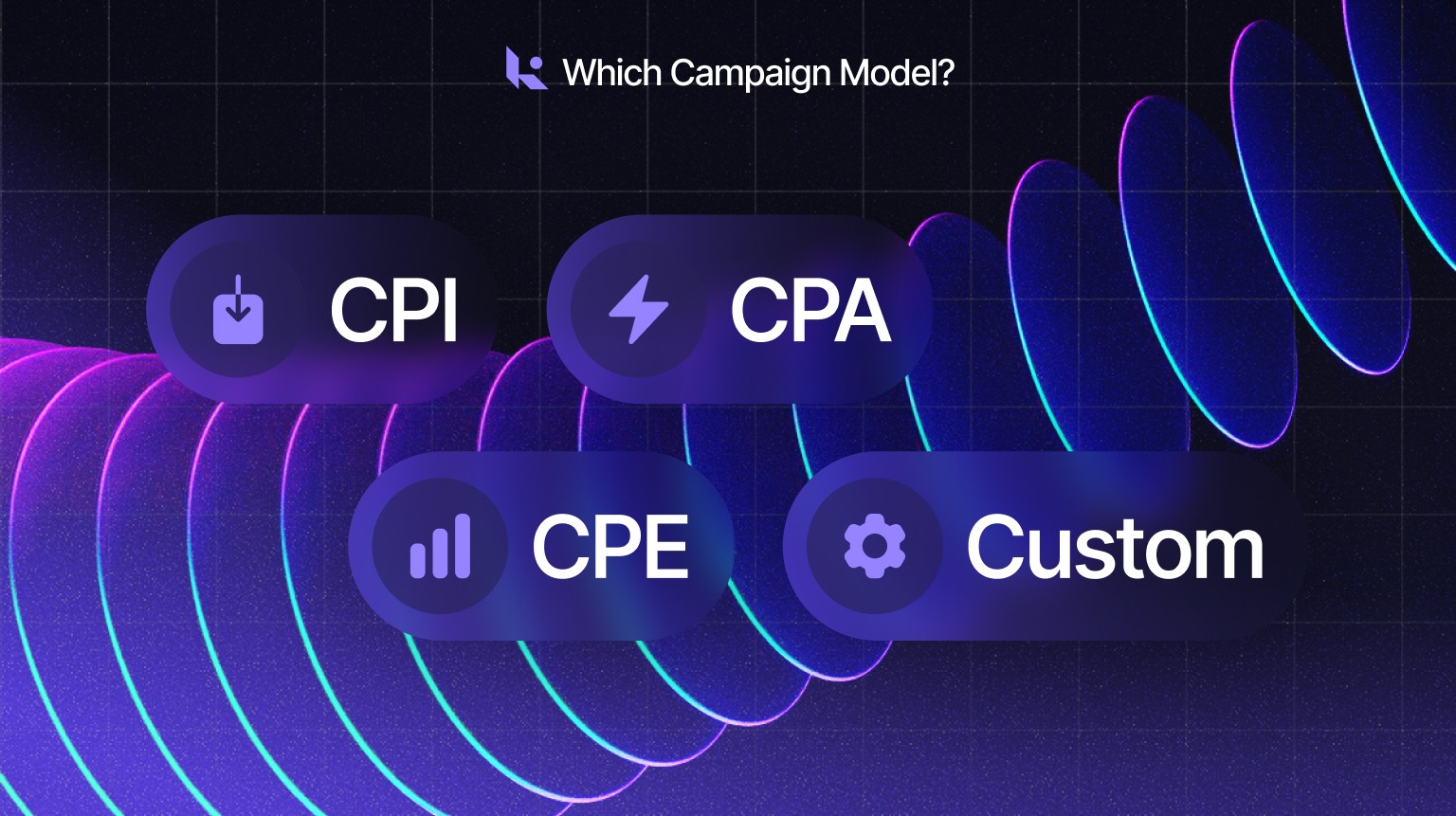
CPI vs CPA vs CPE: Which Campaign Model Is Right for Your App?
Meta title: CPI vs CPA vs CPE: Which Performance Campaign Model Is Right for Your App
Meta description: Not sure whether to run a CPI, CPA, or CPE campaign? This guide breaks down all three models so you can choose the right one for your user acquisition goals.
Target keyword: CPI vs CPA vs CPE
URL slug: /blog/cpi-vs-cpa-vs-cpe-campaign-models
If you have spent any time in mobile marketing or app user acquisition, you have probably come across the terms CPI, CPA, and CPE. They all fall under the performance marketing umbrella, meaning you only pay when something actually happens, but what that something is depends on the model you choose.
Getting this decision right matters because the wrong campaign model means you are either overpaying for users who do not convert, or underpaying in a way that does not attract quality publishers to run your offer. This guide breaks down each model clearly so you can make an informed decision before you launch.
What Is CPI (Cost Per Install)?
CPI stands for Cost Per Install. Under this model, you pay a fixed amount every time a user downloads and installs your app. It is the most straightforward model in mobile performance marketing and works well when your primary goal is volume: getting your app onto as many devices as possible.
CPI campaigns are best suited for games, utility apps, and any product where the value starts from the moment someone has the app installed. If your onboarding is strong and you convert a high percentage of installs into active users, CPI can be extremely cost-effective.
The risk with CPI is that installs alone do not guarantee engagement. You can drive thousands of downloads and still see poor retention if the users are not genuinely interested in your product. This is why many advertisers have moved toward CPA and CPE models, which tie payment to actions rather than installs.
What Is CPA (Cost Per Action)?
CPA stands for Cost Per Action. Instead of paying for an install, you pay when a user completes a specific action inside your app or on your platform. That action is defined by you and could be anything from creating an account to making a first-time deposit.
At Klink Labs, CPA campaigns are used by advertisers across fintech, gaming, mobile apps, subscription services, and online utilities where the meaningful conversion happens after install. For example, a fintech brand running a CPA campaign might only pay when a new user completes identity verification and makes their first deposit, not simply when someone downloads the app.
This model puts more of the performance risk on the publisher network rather than the advertiser, which means the users who do convert tend to be significantly higher intent. You are essentially only paying for the outcome you actually care about.
CPA works best when you have a clear, trackable action that represents genuine value to your business and when your product experience is strong enough to guide users toward that action post-install.
What Is CPE (Cost Per Engagement)?
CPE stands for Cost Per Engagement. This model is similar to CPA but focuses specifically on in-app engagement rather than transactional actions. Advertisers using CPE campaigns pay when users complete specific engagement milestones, such as reaching a certain level in a game, completing a tutorial, or using a core feature a set number of times.
CPE is particularly popular in the gaming vertical. A mobile game publisher running a CPE campaign with Klink Labs might define the trigger as a user completing five in-game events or reaching level 10. This ensures the users being acquired are genuinely engaged with the gameplay, not just passive installs who never open the app again.
For apps and games where long-term retention is the primary success metric, CPE is often the strongest model because it filters for users who actually interact with your product rather than those who simply download it.
How to Choose the Right Model
The right model depends on three things: what your product is, where your conversion value sits, and how much risk you are willing to share with the publisher network.
If you need volume and your install to activation rate is already strong, CPI is efficient and straightforward. If your core value happens post-install through a specific transaction or signup, CPA protects your budget by ensuring you only pay for real outcomes. If you are building a game or engagement-driven product and retention is what you are optimising for, CPE ties your spend directly to the users who will actually stick around.
At Klink Labs, all three models are available depending on your goals. Campaigns can go live within hours for advertisers who already have an MMP or tracking integration in place, and there are no upfront setup fees. You only pay when users convert.
Custom Event Campaigns
Beyond the three standard models, Klink Labs also supports custom event-based campaigns for advertisers with specific or non-standard conversion goals. If your product has a unique funnel that does not fit neatly into CPI, CPA, or CPE, a custom campaign structure can be built around your exact requirements.
Summary
CPI, CPA, and CPE are not competing options where one is always better than the others. They are tools for different stages of growth and different types of products. The best advertisers often use a combination, starting with CPI for volume and layering in CPA or CPE targeting as they learn which user segments convert best.
If you are unsure which model fits your current goals, the Klink Labs team works with you through an initial consultation before any campaign goes live to make sure the structure is right for your product and your market.
FAQ
What does CPI mean in marketing?
CPI stands for Cost Per Install. It is a performance marketing model where advertisers pay a set amount each time a user installs their app.
What is the difference between CPA and CPI?
With CPI you pay for every install. With CPA you only pay when a user completes a specific action after installing, such as signing up or making a purchase. CPA tends to produce higher-intent users.
When should I use CPE instead of CPI?
CPE is better when engagement and retention matter more than raw install volume. It is commonly used for mobile games where the goal is active players rather than passive downloads.
Do I need to choose one model for my whole campaign?
No. Many advertisers run different models for different goals or different audience segments. Klink Labs supports CPI, CPA, CPE, and custom event campaigns depending on what you need.
Are there setup fees for running performance campaigns with Klink Labs?
No. Klink Labs does not charge upfront setup fees. You only pay when users convert against your defined goal.
How quickly can a campaign go live?
If you already have an MMP or tracking integration in place, campaigns on Klink Labs can go live within a few hours.
What types of apps work best with performance marketing?
Games, fintech apps, subscription services, utility apps, and online platforms all run successfully on performance models. The model you choose depends on where your conversion value sits within the user journey.


High Quality Offers,
Real Payouts
Start Earning with Klink Now!









Share Article


